
Dodge City Directory Shelves
The Kansas Historical Society directory catalog is the best first inventory. Its controls filter by city, title word, county, date range, directory type, and paper or microfilm format. A Ford County search finds early county books, long telephone runs, R.L. Polk issues, and later titles that widen from Dodge City to the vicinity or Southwest Kansas. That title change matters. A person outside the city line may appear in a regional issue but not a city-only volume.
| Collection | Years | Where Held | Access |
|---|---|---|---|
| Ford County, Etrick Printery | 1920, 1924 | Kansas Historical Society | Catalog record; paper or microfilm request |
| Southwestern Bell telephone books | 1932-1964 | Kansas Historical Society | Paper and microfilm holdings |
| R.L. Polk city books | 1953-1967, selected years | Kansas Historical Society | Search catalog, then request volume |
| City, vicinity, and area-wide titles | 1965-2015, irregular runs | Kansas Historical Society and local repositories | Catalog, library, or archive inquiry |
The run is not annual. Two 1932 telephone issues survive, some later years carry both city and telephone titles, and the 1980s mix Dodge City with Jetmore, Ashland, and Southwest area-wide books. The catalog shows city or vicinity issues through 2015, but it does not expose every page online. No separately cataloged reverse or criss-cross book was found. Ask the local library about unscanned shelf copies before treating a blank year as evidence that someone left town.
The official holdings results show what the catalog can return for Dodge City and Ford County.
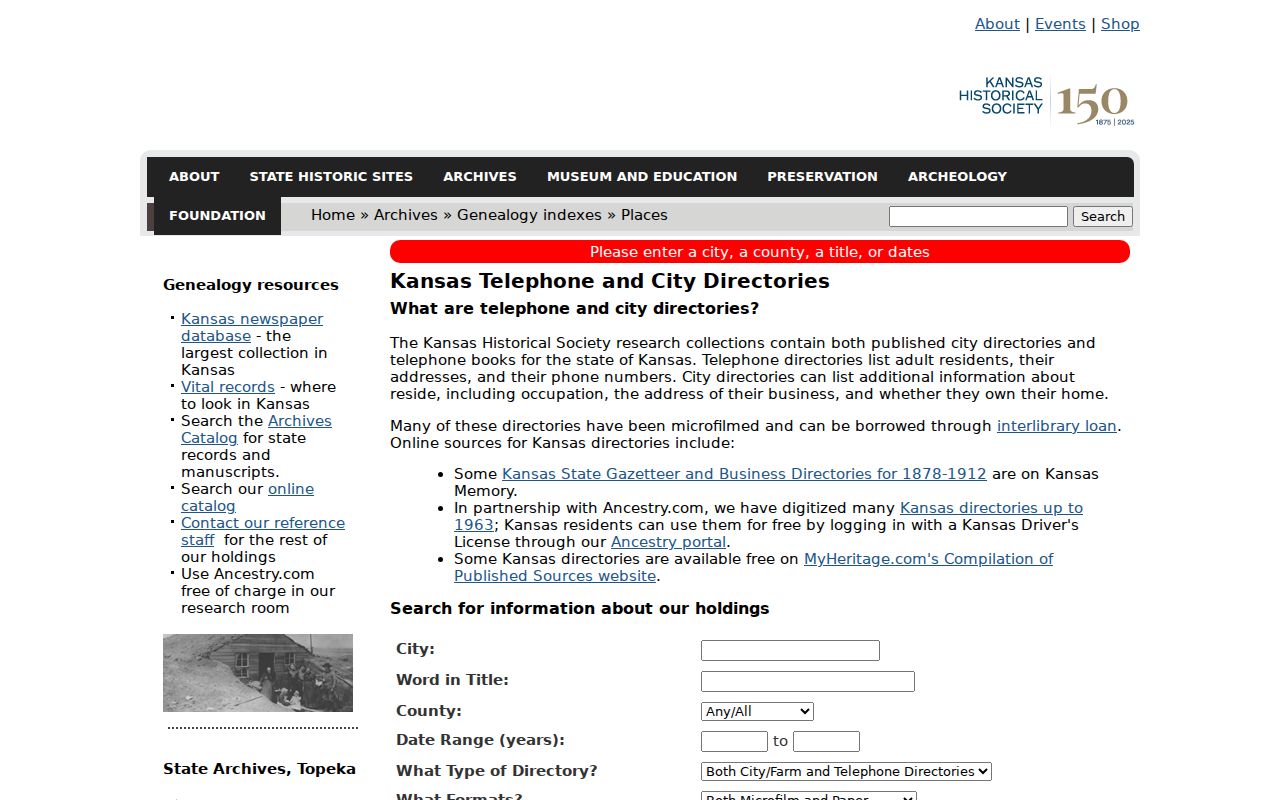
The result set is a collection inventory, not a scan of one household entry, so note the call number and request the actual volume.
Dodge City Books by Era
The publication sequence gives a practical timeline. Etrick Printery supplied Ford County books in 1920 and 1924. Southwestern Bell began the cataloged telephone sequence in 1932 and carried it through 1964. R.L. Polk appears in selected city-directory years from the 1950s into 1967. City and telephone issues overlap during much of 1965-1977, followed by regional and vicinity titles that become less regular.
| 1920 and 1924 | Ford County books, call numbers K/910/-F75/1920 and /1924 |
|---|---|
| 1932-1964 | Southwestern Bell telephone sequence, including two issues in several early years |
| 1953-1967 | Selected R.L. Polk Dodge City issues |
| 1965-1985 | City, telephone, vicinity, and Southwest Kansas titles overlap |
| 1986-2015 | Irregular city, vicinity, and area-wide holdings |
This timeline explains why one failed search proves little. The household may fall in an issue that used a wider title, a telephone listing may depend on having service, or a city volume may simply not have been issued that year.
Dodge City Archive Access
The Kansas Heritage Center catalog adds local material that a statewide city directory search may miss. The center is on the lower level of Dodge City Public Library at 1001 N. 2nd Avenue. It holds books, microfilm, photographs, vertical files, newspapers, yearbooks, club records, and community collections. Hours documented in the research are 9:00 a.m. to 5:00 p.m. Monday through Saturday, with Sunday closed; call 620-225-0248 before a long trip.
Search its ArchiveSpace records by terms, record type, field, and year range. When metadata stops short of a name, staff can check an unscanned volume, obituary file, or microfilm reel. The public library catalog is another route, though its page warned that electronic resources were suspended when researched. Telephone, in-person, and archive-request channels remain important.
For another local channel, the Ford County Legacy Center at 310 Gunsmoke Street preserves county research holdings and artifacts.
The Legacy Center is a contact-based repository rather than a public name index, which makes a focused question about a family, business, school, or address more useful than a broad search request.
Read a Dodge City Entry
A city directory entry is compressed. The Library of Congress directory guide explains the common field pattern, but each Dodge City volume can use its own marks. Photograph or copy the front-matter key first. Then transcribe the listing as printed instead of expanding an abbreviation from memory.
| Printed name | Record spelling, initials, and any alternate form exactly. |
|---|---|
| Household note | A spouse may appear in parentheses; widow or widower wording can mark a life event. |
| Work details | Occupation, employer, or a separate business address may appear. |
| Address and phone | Copy house number, street, apartment or room, and telephone number. |
| Source details | Keep year, publisher, page, title scope, and any owner or renter mark. |
- Criss-cross directory
- A volume or section arranged by street address rather than surname. No separately cataloged Dodge City edition was confirmed.
- Householder index
- An address-ordered list that names the person shown as responsible for a household listing.
- Abbreviation key
- The book's own legend for shortened words and symbols, often printed near the front.
No individual Dodge City entry image was captured in the official holdings search. Describe the normal fields only as a reading aid, and inspect the requested page before quoting a person or assigning meaning to a mark.
Dodge City Directory Companions
Directories gain weight when another dated source agrees. The Kansas newspaper database can find a local paper by city, county, title, and date. Digitized runs include the Dodge City Times from 1876-1892, the Ford County Globe from 1877-1884, and Globe-Republican issues from 1889-1910. Notices and advertisements can tie a directory name to a trade, marriage, death, or address.
The KHS collection overview explains the difference between city books and telephone directories.
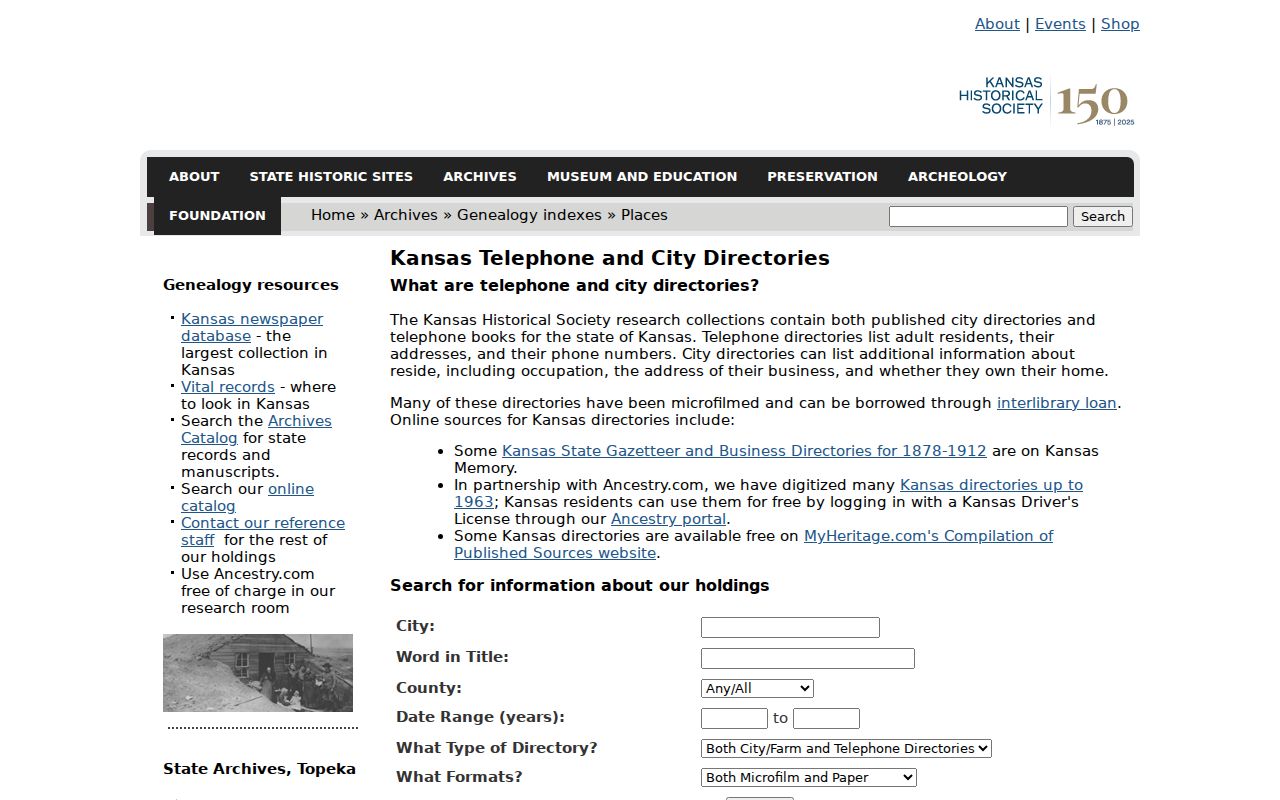
The collection page also points Kansas residents toward additional licensed access, but availability and image rights must be checked for the specific Dodge City title.
Kansas state census rolls for 1895, 1905, 1915, and 1925 help bridge the early years. Ford County reels include Dodge City coverage, while federal household schedules through 1950 are open under the 72-year rule. Maple Grove Cemetery adds another endpoint. The city holds current cemetery records, and KHS collection MS161 includes a Maple Grove lot register for 1888-1928. No public online interment index was located, so use the cemetery office or archive request.
Note: A newspaper notice or directory line is dated evidence, not a substitute for a restricted Kansas vital certificate.
Dodge City Directory Address Changes
An old Dodge City street name can break an otherwise sound name search. Local history records a concrete chain for one well-known route: Tin Pan Alley became Chestnut Street and later Wyatt Earp Boulevard. Search each verified name in the relevant era, then compare the directory address with a plat, legal description, newspaper item, or Sanborn sheet. The legal description is often more stable than a street label when a road changes name or a lot changes shape.
No official source in the research established a citywide Dodge City renumbering year. Do not add a guessed date to a family trail. Use the city's archived ordinances and maps, the Wright Park plat filed May 31, 1876, and Ford County parcel or deed descriptions to build a documented bridge. A directory page establishes how an address was printed in that issue. It does not prove that today's number marks the same structure.
The physical city changed too. Fires in 1885 and Front Street urban-renewal demolition from 1967-1969 mean a directory address may point to a vanished building. Pair the listing with a dated map before claiming that a household occupied the present structure. That distinction preserves the value of the city directory entry without overstating it.
Dodge City Records Before Directories
The historical shelf reaches beyond published resident books. Kansas Historical Society holds Records of the City of Dodge City, 1875-1928 on microfilm. Its MS160 material includes voters from 1886-1902. MS161 carries Maple Grove lot entries from 1888-1928 and Ford vital statistics from 1905-1911. These narrow runs can settle a same-name question when a directory year is absent.
Dodge City's built setting can also be checked against the Library of Congress Sanborn sequence from 1884 through 1926. Fire-insurance maps show structures and block conditions, not a complete resident roll. Used with an entry, they help test whether an address referred to the same building and street setting. City microfilm, maps, and city directories form a dated chain without pretending any one item proves continuous residence.
Trace Dodge City Family Lines
Family history works best as a sequence, not a one-book match. Begin near a known date, copy the source details, and move one issue at a time. Compare city, telephone, vicinity, and area-wide coverage before deciding that an absence marks a move.
- Choose the latest historical year likely to include the person or address, then request the correct Dodge City or regional title.
- Transcribe the name, spouse note, work detail, address, phone, marks, page, publisher, and issue year.
- Search the next available issue under spelling variants and follow both the surname and address.
- Pair the sequence with an open state or federal census, then check deeds or permits when ownership or a building date matters.
- Close the trail with a newspaper, probate file, cemetery record, or eligible vital-record request.
A missing listing can mean a move, death, publication gap, missed canvass, lack of telephone service, or a switch to a regional title. It cannot choose among those outcomes alone. A later census, deed, obituary, or cemetery entry supplies the needed second date. If research reaches modern ownership instead, use the Dodge City street directory workflow rather than forcing an old volume to answer a current address question.